

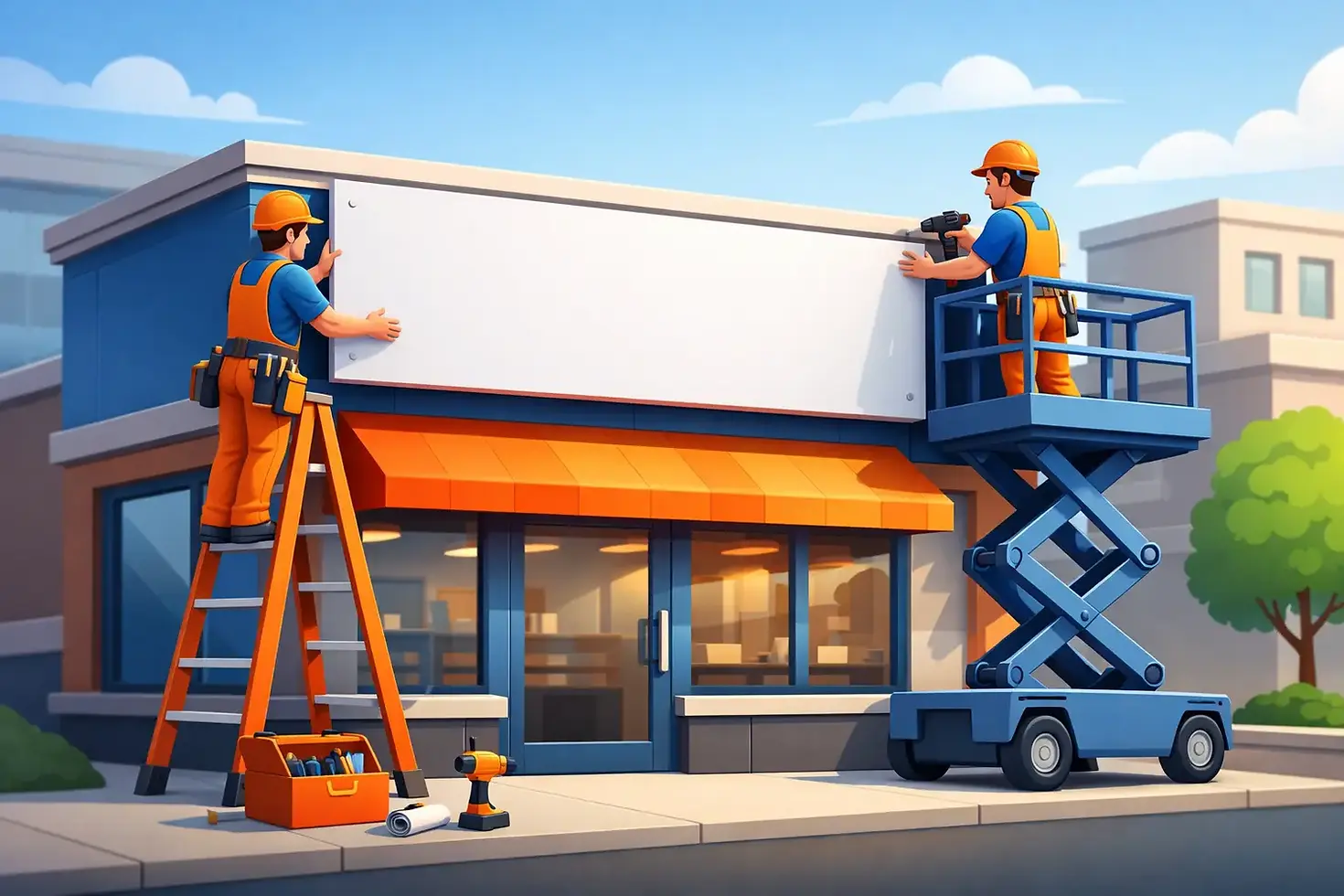
Storefront Sign Installation Done Right
A storefront sign usually gets judged in seconds, but the work behind it starts much earlier. Storefront sign installation is not just the last step in a branding project. It affects visibility from the street, landlord approval, code compliance, structural attachment, electrical coordination, and how polished your business looks on day one.
For retail operators, property managers, and project teams in the Bay Area, that makes installation a planning issue as much as a production issue. A sign can look great in a rendering and still fail in the field if mounting conditions, permitting, or site access were not handled correctly. The strongest results come from treating the storefront as a real construction environment, not just a blank facade.
What storefront sign installation actually includes
In practice, storefront sign installation covers more than placing letters on a wall. The scope often starts with a site survey to verify dimensions, mounting surfaces, access conditions, electrical availability, and any obstacles that affect fabrication or install sequencing. That information drives the right sign method from the start.
A straightforward vinyl window graphic install is one category. A set of dimensional letters on stucco or raceway-mounted illuminated channel letters is another. Each requires a different attachment strategy, different tools, and sometimes different trades. If a sign is lit, electrical routing, disconnects, and local code requirements also become part of the project.
That is why experienced sign teams look at fabrication and installation together. Material thickness, weight, stand-off depth, wall condition, and finish details all affect how the final sign performs outdoors. A design that works on paper may need to be adjusted once the real storefront conditions are verified.
Why installation planning matters before fabrication
One of the most common project delays happens when fabrication begins before the site conditions are fully understood. If the facade has hidden irregularities, if the landlord has restrictions on sign size, or if the city requires a permit package with specific drawings, the project can stall after money and time have already been committed.
Early planning reduces that risk. For business owners opening a new location, it helps align the sign package with opening schedules, inspections, and brand rollout. For property managers and contractors, it keeps the exterior package coordinated with other trades working on the site.
This matters even more in mixed-use buildings, tenant improvement projects, and older storefronts where existing conditions are rarely as clean as they appear in photos. A masonry surface may need different anchors than expected. A sign band may not be level across the full width. Power may be present, but not where the sign requires it. These are manageable issues when identified early and expensive ones when discovered late.
Common storefront sign types and install considerations
Storefront sign installation varies by sign type, and each format has its own field requirements.
Dimensional letters are a common choice for professional offices, retail storefronts, and hospitality spaces. They can be mounted flush or with stand-offs, depending on the brand style and the wall surface. The key issue is precision. Letter spacing, template accuracy, and clean attachment points make the difference between a premium look and a sign that feels slightly off.
Illuminated signs introduce more coordination. Channel letters, cabinet signs, and halo-lit logos need proper mounting, power access, and weather-resistant electrical connections. The visual result matters, but so does serviceability. A sign should be installed in a way that allows future maintenance without damaging the facade or creating unnecessary downtime.
Window graphics are often underestimated because they seem simple. In reality, alignment, glass condition, temperature, and graphic scale all affect the finish. Full-coverage window vinyl, hours decals, promotional graphics, and frosted privacy films need clean installation to avoid bubbling, lifting, or visible distortion.
Panel signs and architectural storefront identifiers often depend on the substrate. Metal, acrylic, composite panels, and routed sign faces each respond differently to outdoor exposure and mounting pressure. In many cases, the best result comes from matching the sign system to the facade rather than forcing a standard approach onto every location.
Permits, property rules, and compliance
For many commercial clients, the biggest question is not how the sign will look. It is whether it can be approved, fabricated, and installed without disrupting the schedule. In the Bay Area, signage often involves city review, landlord criteria, shopping center standards, and building-specific restrictions.
Some storefront signs require permit drawings, site documentation, and approval before installation can begin. Illuminated signs commonly trigger additional review. Historic districts, design review boards, and multi-tenant properties may add another layer of requirements. Even when the sign itself is straightforward, the approval process may not be.
This is where a full-service sign partner adds practical value. When design intent, fabrication methods, and installation requirements are managed under one scope, it becomes easier to produce accurate submittals and avoid avoidable revisions. It also helps keep the visual branding aligned with the actual approval path instead of designing something that will need major changes later.
Site conditions can change the right solution
Two storefronts with the same brand package may require different installation methods. That is normal. The right approach depends on facade material, mounting height, access equipment, exposure to weather, and whether the storefront is part of a leased retail center or a stand-alone building.
For example, a sign mounted to smooth metal paneling may allow a cleaner attachment strategy than one mounted to textured stucco or aging brick. A downtown location may require more careful scheduling because of pedestrian traffic, parking limits, or restricted install windows. A shopping center may require work to happen outside business hours. None of that changes the brand standard, but it does change how the project should be executed.
Good installation planning accounts for those trade-offs early. Sometimes the ideal sign style needs to be modified to fit the building safely and legally. Sometimes a raceway is the better choice even if a client initially prefers direct mounting. Sometimes non-illuminated letters are the smarter fit for budget and approval timing. The point is not to force one option. The point is to choose a sign solution that can actually be produced and installed correctly.
Working with one vendor simplifies execution
Storefront projects move faster when design, fabrication, and installation are connected. When those stages are split across multiple vendors, small issues tend to grow. Measurements get rechecked, responsibilities get blurred, and changes in the field can create back-and-forth that slows the whole job.
A single sign company can carry the project from concept through final install with better continuity. The design team understands how the sign will be built. The fabricators understand how it will be mounted. The installers know what was approved and what the finished result is supposed to look like. That reduces surprises and helps maintain consistency across one location or multiple sites.
For clients managing broader branding needs, this is even more useful. Exterior storefront signs often connect to interior graphics, ADA signage, window films, directional signs, and branded environmental elements. Managing those under one production partner helps keep materials, finishes, and visual standards aligned.
What to expect during storefront sign installation
Once approvals, fabrication, and scheduling are in place, installation should be controlled and efficient. The field team verifies layout, protects the site, completes mounting or electrical connection as required, and checks the final placement for level, spacing, and finish quality.
For occupied retail or office properties, coordination matters. Access to storefront entrances, pedestrian flow, and adjacent tenants all need to be considered. A professional install should minimize disruption while still allowing enough time to do the work cleanly. Rushed installs tend to show it.
Final review is part of the job. That includes checking the visual alignment from the street, confirming illumination where applicable, and making sure all components are secure and finished properly. A storefront sign should not just be attached. It should look intentional, durable, and consistent with the brand it represents.
Choosing the right partner for storefront sign installation
If you are planning a new storefront, rebrand, tenant improvement, or sign replacement, look for a team that handles real-world execution, not just design concepts. Ask how site surveys are managed, how permits are handled, what sign types they fabricate, and how installation is coordinated with building conditions and project schedules.
Urban Graphics Inc. approaches storefront signage as a full production scope, from design and fabrication through final installation. That matters when the goal is not just getting a sign up, but getting the right sign approved, built, and installed to match the space.
A storefront sign is one of the first things people notice about a business. Make sure the installation process gets the same level of attention as the design, because that is what turns a sign package into a finished storefront that looks ready for business.


Comments