

How to Choose a Paint Protection Film Installer
A paint protection film installer can make a clean vehicle look exceptional or leave you with visible edges, trapped debris, and film that fails early. The material matters, but the install matters just as much. If you are paying for PPF to protect paint, preserve appearance, and reduce future correction work, the installer is the real decision point.
For Bay Area clients, that choice usually comes down to execution. You want accurate pattern handling, clean prep, careful edge treatment, and a shop that knows how to work around trim, contours, sensors, and complex panel shapes. Good PPF work is not just about laying film on a hood. It is about how the final result looks in normal daylight, how it wears over time, and how well the installer manages the details that most people only notice when they go wrong.
What a paint protection film installer actually does
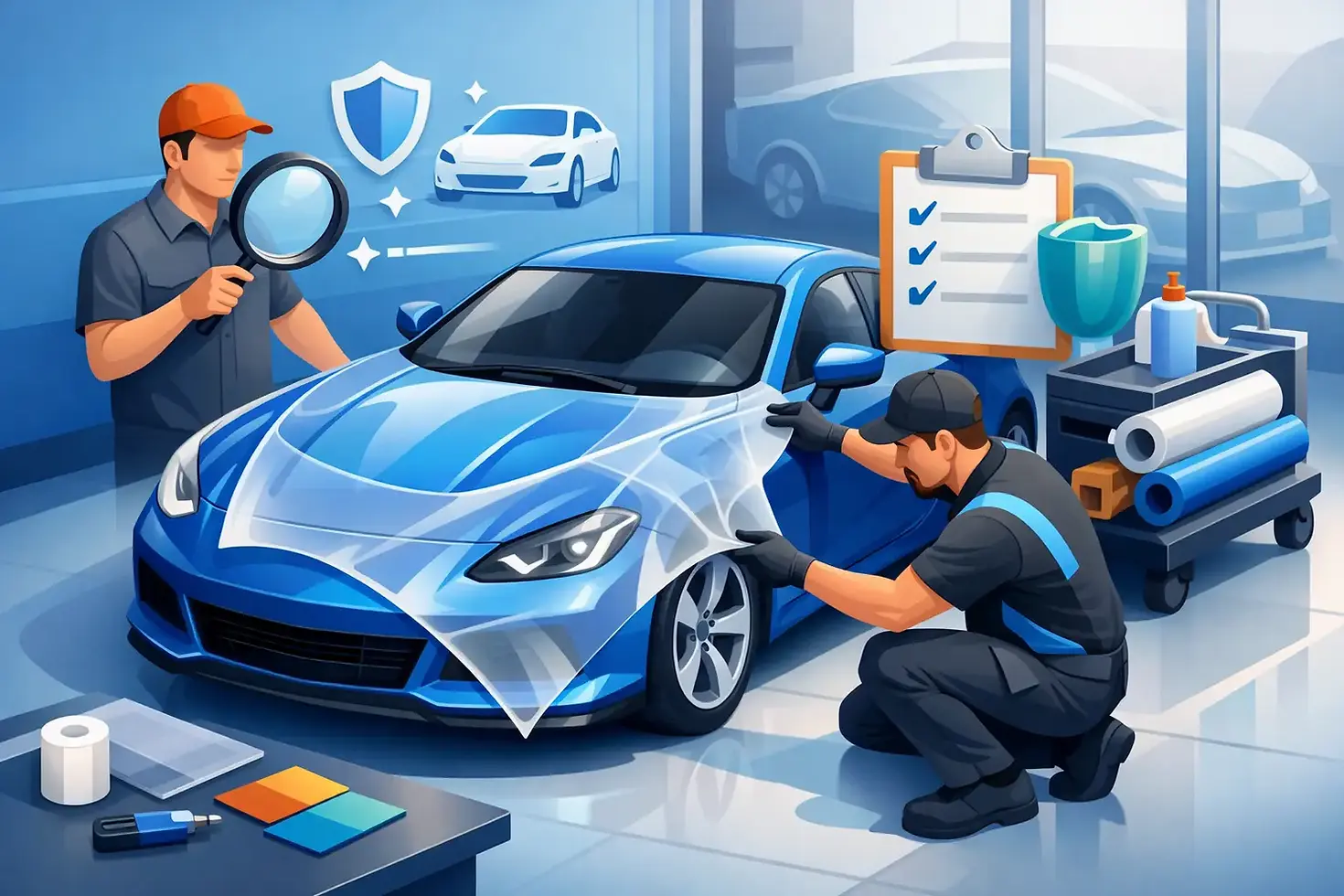
A professional paint protection film installer handles more than application. The process starts with evaluating the vehicle’s current paint condition, the panels being protected, and the coverage level that fits the client’s goals. Some owners want high-impact areas only, such as the front bumper, partial hood, mirrors, and fenders. Others want a full front package or full-body coverage for maximum protection and a more uniform finish.
The installer also has to account for paint correction needs before film goes down. PPF does not fix scratches or swirls underneath it. In many cases, it preserves what is already there. That means prep is not just washing the car. It can include decontamination, polishing, adhesive-safe cleaning, and careful inspection under proper lighting.
Once installation begins, precision becomes the difference between a premium result and an average one. Stretching film too aggressively, misaligning a pattern, rushing around edges, or trapping moisture where it should not be can affect both appearance and lifespan. A qualified installer works panel by panel, checks fitment closely, and understands when a pre-cut pattern works well and when a custom bulk approach may produce a better result.
How to evaluate a paint protection film installer
The first thing to look at is finished work, not just marketing photos. A strong portfolio should show close-up views of edges, curves, bumper recesses, headlights, and difficult transitions. Wide shots of glossy vehicles look good, but they do not tell you how refined the installation really is.
You should also ask how the shop approaches prep. This is one of the clearest signs of whether the installer is process-driven. If prep sounds rushed or vague, the final install usually reflects that. A professional shop should be able to explain how it cleans the surface, what happens if the paint needs correction, and how it handles contamination control during installation.
Experience with different surfaces matters too. Flat panels are straightforward compared to deep contours, textured trim boundaries, or front-end designs with sensors and complex cut lines. A capable installer understands where lifting is more likely, where relief cuts may be necessary, and how to keep the film visually tight without forcing it beyond its limits.
For commercial clients, consistency is another factor. If you are protecting a fleet vehicle, executive transport unit, branded service vehicle, or high-visibility company car, you need repeatable quality. The shop should be organized enough to document scope, coordinate scheduling, and deliver the same standard across multiple installs.
Pre-cut patterns vs. custom bulk installation
This is one of the most common points of confusion. A lot of PPF installs rely on software-generated pre-cut patterns. These are useful because they improve consistency, reduce cutting on the vehicle, and speed up installation. For many panels, they work very well.
But pre-cut does not automatically mean better. Some vehicles benefit from bulk installation in specific areas, especially when the goal is deeper edge wrapping or cleaner adaptation around unusual contours. The right paint protection film installer knows when to use each method. It is not about choosing one approach for every job. It is about choosing the method that produces the best finish on that vehicle.
If a shop cannot explain that distinction, it may be treating all installs as the same. They are not. Different makes, panel shapes, and coverage packages require different decisions.
Questions worth asking before you book
Ask what film brand the shop uses, but do not stop there. Ask why they use it, what finish options are available, and how they match the material to the client’s use case. Gloss, matte, self-healing properties, hydrophobic performance, and warranty terms can all vary.
Ask whether badges, trim, or accessories will be removed where appropriate. In some cases, removal allows for a cleaner install. In other cases, it introduces unnecessary risk. A professional answer should sound measured, not automatic.
You should also ask about edge finish. Are edges wrapped where possible? Which areas will remain visible by design? What should you realistically expect on bumpers, corners, and recessed sections? Good installers do not promise perfection in impossible areas. They explain the trade-offs clearly and set expectations before work starts.
Turnaround time is another practical issue. Fast scheduling is helpful, but speed should not come at the expense of cure time, prep quality, or inspection. If a shop is promising an unusually quick completion on a large coverage package, it is reasonable to ask how that timeline is being supported.
Why installation environment matters
PPF is sensitive to dust, lighting, temperature, and handling conditions. A controlled shop environment supports better adhesion, cleaner finishes, and more reliable inspection before delivery. This matters even more on dark paint, large hoods, and high-gloss vehicles where every flaw shows.
A proper environment also helps with post-install review. Moisture pockets can be normal in some areas immediately after application, but contamination, silvering, and poorly finished edges are not the same thing. An experienced shop knows the difference and does not send a vehicle out without checking the work carefully.
For clients who already manage branded environments, this should sound familiar. Whether the product is architectural signage, window graphics, vehicle graphics, or PPF, the final result depends on controlled production and clean installation conditions. The process discipline is similar even when the substrate changes.
Cost, coverage, and where cheap quotes go wrong
PPF pricing varies for good reason. Coverage level, vehicle size, paint condition, film type, and installation complexity all affect cost. A front bumper on one vehicle can take far more labor than the same area on another. Full-body coverage is also not simply a larger version of a front package. It introduces more edge work, more inspection, and more opportunities for error.
The cheapest quote often leaves out part of the real picture. Sometimes prep is minimal. Sometimes the film quality is lower. Sometimes the package excludes areas you assumed were included. And sometimes the labor standard is simply not there.
That does not mean the highest quote is automatically the best one either. You are looking for clarity. A reliable estimate should define coverage, film type, prep scope, expected finish, and timing. If those details are missing, comparison becomes difficult and misunderstandings become more likely.
What commercial clients should consider
Business owners and facilities teams usually think in terms of asset appearance, lifecycle, and vendor reliability. That is the right approach here too. If a vehicle supports brand presentation, client-facing operations, or executive transport, PPF can protect a visible business asset from road wear and surface damage.
The installer should be able to work with scheduling constraints, communicate scope clearly, and deliver a finished result that reflects well on the business. That is especially relevant when PPF is paired with other visual applications such as fleet graphics or branded vehicle elements. A provider with practical installation discipline across categories, including Urban Graphics Inc., can be easier to work with when appearance standards and execution timelines both matter.
The best choice is usually the most specific one
A good paint protection film installer does not talk in general terms for long. They ask what vehicle you have, how you use it, what level of protection you want, what finish you expect, and where you are willing to accept visible edges or coverage limits. That specificity is a good sign.
The right installer should make the scope clearer, not more confusing. If the conversation gets more precise as you ask questions, you are probably talking to a shop that understands the work. If everything sounds broad and sales-driven, keep looking.
When PPF is installed well, it does its job quietly. The paint stays cleaner-looking, vulnerable surfaces hold up better, and the vehicle presents the way it should. That outcome starts long before the film touches the panel. It starts with choosing the installer who treats the process like finish work, not just another appointment on the schedule.


Comments