

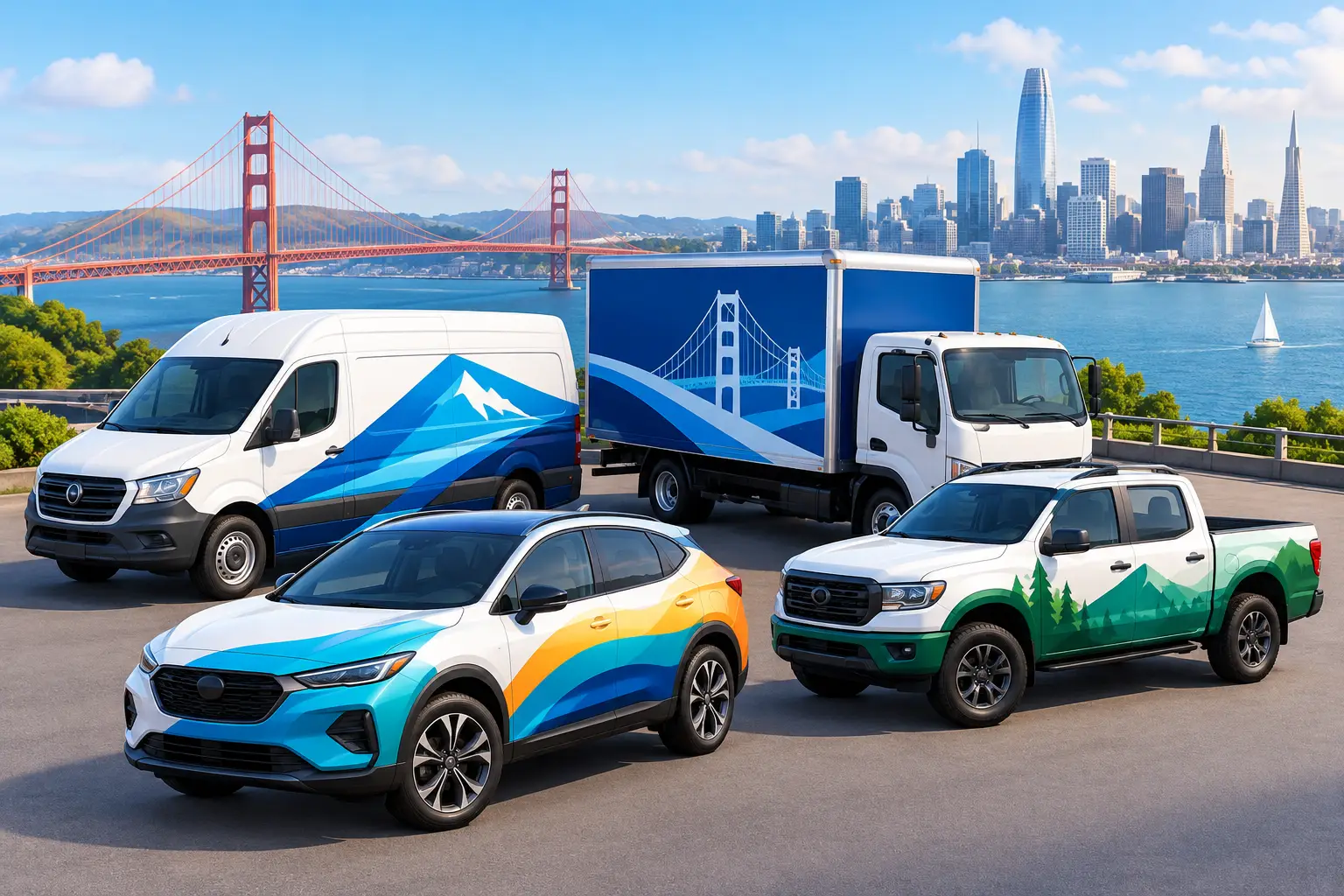
Best Branded Fleet Graphic Options for Bay Area
A service vehicle parked at a customer site has one job before the crew steps out: make the company recognizable. The best branded fleet graphic options turn vans, pickups, box trucks, and delivery vehicles into clear, consistent business identifiers without creating a maintenance problem or exceeding the project budget. For Bay Area businesses, the right choice depends on fleet size, vehicle type, service territory, brand standards, and how long each vehicle will remain in service.
Fleet graphics should do more than display a logo. They need to be readable at a distance, hold up to daily driving and cleaning, and give customers enough information to act. A well-planned vehicle graphics program can support field operations, local visibility, recruiting, and brand consistency across every vehicle your team operates.
Start With What the Vehicle Needs to Do
The most effective fleet graphic is not always the largest or most colorful one. A plumbing van parked in front of a home needs immediate name recognition, a phone number, and a service category. A contractor truck may also need license information, safety messaging, and room for changing project decals. A delivery fleet may benefit most from bold brand coverage that remains visible in traffic.
Before selecting a format, identify the information that must appear on every vehicle. Usually this includes the company name, logo, website or phone number, and a concise description of services. If vehicles work across multiple divisions, consider whether each division needs its own color system or whether a consistent master brand is more valuable.
Vehicle body shape matters as much as the artwork. A cargo van offers broad, flat side panels that work well for lettering, printed graphics, and partial wraps. Pickup trucks have less continuous space but can carry strong door graphics, tailgate branding, and rear-window graphics. Box trucks provide large panels for high-impact printed graphics, while passenger vehicles often require a more restrained design that follows their contours.
Best Branded Fleet Graphic Options by Coverage Level
Vinyl lettering and logo packages
Cut vinyl lettering is a practical starting point for fleets that need clear identification at a controlled cost. This option typically includes a logo, company name, contact information, and service description applied to doors, side panels, tailgates, or rear doors. It is especially effective for contractors, facilities teams, property service companies, and professional service vehicles.
The main advantage is efficiency. Vinyl lettering is generally faster to produce and install than full printed wraps, and individual elements can be replaced if a phone number, license number, or vehicle panel changes. It also works well when a fleet includes several different makes and models because the core layout can be adapted without redesigning every vehicle from scratch.
The trade-off is visual impact. Lettering creates a clean, professional appearance, but it will not command the same attention as a broad printed design. Strong contrast, adequate letter height, and thoughtful placement are essential. Small text may look acceptable in a proof but disappear from the street.
Spot graphics and printed decals
Spot graphics add color, photography, product imagery, patterns, or branded shapes to specific areas of a vehicle. They can cover doors, rear panels, quarter panels, hoods, or selected side sections without extending across the entire body. This is a strong middle-ground option for companies that want more personality than basic lettering while keeping material use and installation time manageable.
For example, an HVAC company might use bold logo graphics on the doors, a graphic temperature pattern along the lower panels, and a highly visible service message on the rear doors. A food or retail delivery fleet might use product images and brand colors to create a more consumer-facing presentation.
Spot graphics are flexible, but they require discipline. Too many separate decals can make a vehicle look cluttered. A clear hierarchy works best: brand name first, service or product second, contact method third. The vehicle itself should not become a crowded brochure.
Partial wraps
A partial wrap covers selected portions of the vehicle with printed vinyl while leaving some of the original paint visible. Common applications include rear quarters, lower body panels, the back half of a cargo van, or a graphic band that ties both sides together. This approach gives businesses a high-visibility look while reducing the material and labor required for a full wrap.
Partial wraps are often one of the best branded fleet graphic options for established businesses that want a more polished fleet image but need to manage costs across multiple vehicles. They offer room for large logos, color blocks, custom imagery, and consistent layouts that can be repeated throughout the fleet.
The design must be intentional. A partial wrap should look like a complete visual system, not like a full wrap that was stopped halfway. Using the vehicle’s paint color as part of the design can create a clean, purposeful result. This is particularly useful for white commercial vans and trucks, which provide a neutral foundation for high-contrast brand graphics.
Full vehicle wraps
Full wraps provide the most surface coverage and the greatest design freedom. They can transform a vehicle into a complete mobile brand environment, incorporating large-scale color, images, patterns, product visuals, and messaging across the sides, rear, hood, and other applicable panels.
This format is a strong fit for companies with highly competitive service areas, consumer-facing brands, promotional fleets, and vehicles that spend substantial time on the road. A full wrap can also help create consistency when fleet vehicles come in different factory colors. Instead of allowing a mixed fleet to dilute the brand, the wrap establishes a unified appearance.
The investment is higher, and the vehicle must be prepared properly before installation. Existing paint should be in good condition, surface contaminants must be removed, and damaged body panels should be repaired first. Fleet managers should also plan for downtime, because the vehicle will be off the road during installation and curing.
Rear-door and rear-window graphics
Rear graphics deserve more attention than they usually receive. In traffic, the back of a van, truck, or box truck is often the longest view other drivers get. Rear doors are ideal for a large logo, a concise service statement, a phone number, and a clear call to action.
Perforated window film can add branding to rear windows while preserving outward visibility when used appropriately. However, rear graphics should never compromise required lighting, reflectors, safety markings, license plates, or driver visibility. Commercial vehicles may also have specific regulatory requirements, so the design needs to account for functional equipment from the start.
Design for Readability, Not Just Appearance
Fleet graphics are viewed in motion, at intersections, from parking lots, and from behind in traffic. That means the design must communicate quickly. Large, high-contrast text consistently outperforms dense blocks of information. A passerby should understand who you are and what you do in a few seconds.
Avoid treating every vehicle panel the same. Side panels are best for the company name and core service message. Rear panels should prioritize a contact point or short action statement. Doors can carry a logo and licensing details. On large box trucks, broad blank areas can support a more dramatic visual statement without making the vehicle hard to read.
Color choices should also account for real-world conditions. Bay Area fog, glare, rain, and shaded streets can reduce visibility. A subtle gray logo on a silver van may look sophisticated in a mockup but perform poorly on the road. High-contrast combinations and readable typefaces are more reliable for working fleets.
Material, Installation, and Maintenance Considerations
Commercial-grade cast vinyl is commonly used for vehicle graphics because it conforms well to curves, rivets, and contours while offering long-term durability. The right laminate helps protect printed graphics from UV exposure, moisture, road debris, and routine washing. Material selection should match the vehicle’s expected service life and the complexity of the installation.
A fleet vehicle is a working asset, so the graphics program should account for repairs and replacements. Door dings, body work, accident repairs, and equipment changes can affect graphics. Keeping approved artwork, color references, and production specifications on file makes it easier to replace one panel without creating visible inconsistencies across the fleet.
Routine care is straightforward but matters. Hand washing or touchless washing is generally gentler than aggressive brush systems. Avoid pressure-washing too close to graphic edges, and address fuel spills, bird droppings, and heavy grime promptly. If a vehicle is being sold or returned at the end of a lease, professional graphic removal helps protect the underlying finish.
Build a Fleet Standard That Can Scale
The best fleet programs are designed for expansion. Rather than treating each vehicle as a separate project, create an approved layout system for vans, pickups, box trucks, and specialty vehicles. Define logo placement, primary colors, typography, contact information, and required regulatory details. Then adapt the system to each body style without losing the overall identity.
This approach is especially valuable for businesses adding vehicles over time or replacing older units in phases. It prevents the common problem of having three different logo sizes, multiple shades of brand color, and inconsistent phone numbers moving through the same service area.
Urban Graphics Inc. can coordinate design, production, and professional installation so fleet graphics align with your storefront signage, interior branding, and other commercial visual applications. Working from a single brand standard helps maintain consistency across every customer touchpoint.
A fleet is most effective when customers can recognize it before they need your service. Choose the coverage level that fits your budget and operating conditions, then invest in a design system that remains clear, durable, and easy to repeat as your business grows.


Comments